
When women in St. Cloud, Minnesota hear about breast cancer awareness, the conversation often focuses on mammograms and early detection. Those are essential. But another question deserves attention: What can women do to lower their chances of developing breast cancer in the first place?
There is no guaranteed way to prevent breast cancer. Age, inherited gene changes, and other factors are outside our control. Still, certain everyday habits can help lower risk. A woman who develops breast cancer has not failed to take care of herself. Healthy habits offer protection, but they cannot eliminate every risk. NCI
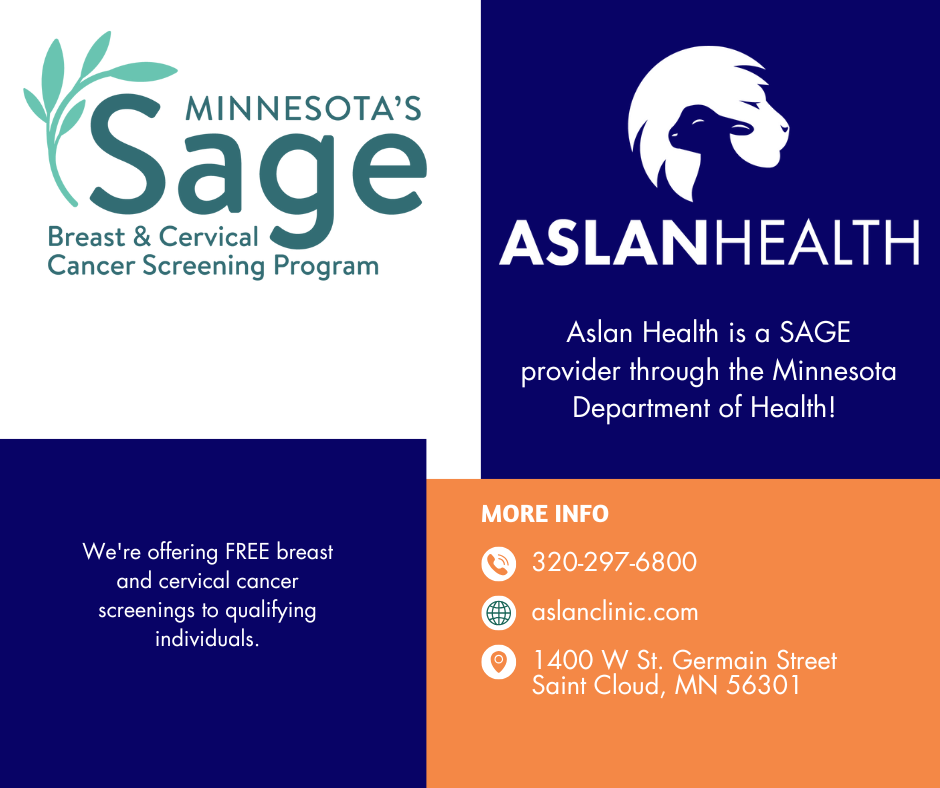
At Aslan Health, we want women to have both practical prevention information and access to screening. Through Minnesota’s SAGE program, eligible women can receive free breast and cervical cancer screening. Aslan Health Clinic
Move more throughout the week
Regular physical activity is linked with a lower risk of breast cancer. The American Cancer Society recommends 150–300 minutes of moderate activity each week, or 75–150 minutes of vigorous activity. American Cancer Society
Brisk walking, biking, dancing, and swimming are practical options. Thirty minutes of brisk walking five days a week reaches the lower end of the moderate activity goal.
If that feels out of reach, begin with shorter walks and build gradually. Choose activities that fit your health and abilities. You do not need a gym membership to begin moving more.
Avoid alcohol or reduce how much you drink
Alcohol increases breast cancer risk, and risk rises as consumption increases. For cancer prevention, avoiding alcohol is the best choice. Wine, beer, and liquor all contain alcohol; wine does not offer an exception to this risk. American Cancer Society
If you drink, reducing the amount is a practical step you can take toward lowering risk.
Work toward a healthy weight, especially after menopause
Excess body weight after menopause is associated with increased breast cancer risk. Avoiding excess weight gain as you age may help lower that risk. American Cancer Society
This does not require a crash diet. A sustainable approach can include regular movement, balanced meals, and support from a healthcare provider.
If weight management has been difficult, bring it up at your next appointment so you can discuss realistic goals.
Choose nutritious foods without relying on a miracle diet
Vegetables, fruits, beans, and whole grains can be part of a healthy eating pattern that supports overall health and weight management.
However, no specific food has been proven to guarantee breast cancer prevention. There is also no strong evidence that vitamins or dietary supplements prevent breast cancer. Products marketed as “cancer prevention” should not replace healthy habits or recommended screening. American Cancer Society
Discuss hormone therapy with your provider
Some hormone treatments can affect breast cancer risk. Combined estrogen and progesterone therapy used for menopause can increase risk, although the effects depend on the treatment and your individual circumstances. CDC
If you use hormone therapy or hormonal birth control, ask your provider how the benefits and risks apply to you. Review the reason for treatment, your personal and family history, and possible alternatives. Make medication changes with your prescriber. American Cancer Society
Breastfeed if it is possible and right for you
Breastfeeding may help lower breast cancer risk. For women who are able and choose to breastfeed, this can be an additional health benefit. NCI
Breastfeeding is not possible for every mother. Women who cannot breastfeed or choose another feeding approach still deserve support and compassionate care.
Know your family history and ask about your personal risk
Tell your provider about breast or ovarian cancer on both your mother’s and your father’s sides of the family. Breast cancer at a young age, several affected relatives, or breast cancer in a male relative may warrant a closer review. CDC
Some women at higher risk may benefit from genetic counseling, additional screening, or medications that reduce breast cancer risk. Preventive surgery is an option for a small group with very high risk. These decisions require an individualized discussion with qualified clinicians. American Cancer Society
Even without a family history, women can develop breast cancer. Family history helps guide care, but its absence does not make screening unnecessary. CDC
Healthy habits and early detection belong together
Risk reduction and screening serve different purposes. Healthy habits may lower the chance of developing breast cancer. Mammograms look for cancer early, before it causes symptoms.
Feeling healthy, exercising, or eating well does not replace recommended mammograms. Discuss when to start screening and how often to have it with your provider. Women at higher risk may need a different screening plan. CDC
Also, seek prompt evaluation for:
- A new lump in the breast or underarm.
- Skin dimpling, thickening, or swelling.
- A nipple that newly pulls inward.
- Unusual nipple discharge, especially blood.
- Another new change in the breast’s appearance or feel.
Many changes are not cancer, but they should be checked. Do not wait for your next routine mammogram to report a concern, even if a recent mammogram was normal. CDC
Free breast cancer screening through SAGE at Aslan Health
Cost should not leave women without a place to ask for help.
SAGE is Minnesota’s breast and cervical cancer screening program. It provides free covered services for eligible patients who meet age, income, and insurance requirements.
Women without insurance may qualify. Some women with insurance may also qualify if they face deductibles, copays, or other out-of-pocket screening costs.
Depending on eligibility and medical need, covered services can include mammograms and certain follow-up tests, such as diagnostic mammograms, breast ultrasound, and biopsy. MN Dept. of Health
Aslan Health is a local resource for women in St. Cloud and nearby communities such as Waite Park, Sauk Rapids, and Sartell. Our team can help review SAGE eligibility, explain screening options, and coordinate mammograms with an imaging facility. Aslan Health Clinic
All appointments are $75. Eligible SAGE-covered screening services are provided at no cost. Services outside SAGE coverage may have additional charges. Ask our team which services are covered before your visit.
Learn more about our women’s health services.
Schedule an appointment at Aslan Health
Whether you want to discuss breast cancer risk, arrange screening, or have a new breast concern, we are here to help you take the next step.
Call 320-297-6800 to schedule an appointment and ask about SAGE eligibility.
Aslan Health
1400 W St. Germain St.
St. Cloud, MN 56301
We are across from the Great River Regional Library, with nearby public transportation access. St. Cloud, MN Primary Care Clinic